mardi, décembre 02, 2014
Carbon emission reduction IS feasible, if...
This article is actually comforting me into my positions: true carbon reduction will only come from fossil fuel majors. To continue existing they will find the way to reduce carbon emission. The only thing that needs to be done is Worldwide government laws and act to fiscalize or penalize carbon emission, fossil fuel production... only then will they, as a mean of survival, accept to invest in carbon reduction plans.


mardi, août 12, 2014
The wonders of chemistry ^_^
Nature published the Chemist's choices of 2014, within this review a lot of amazing stuff that makes you realize that Mother Nature can do it all, but not necessarily needs to!
Here is a selection of my preferred ones:
A new plastic material imitates veins to heal itself:
A robo-chemist for organic synthesis

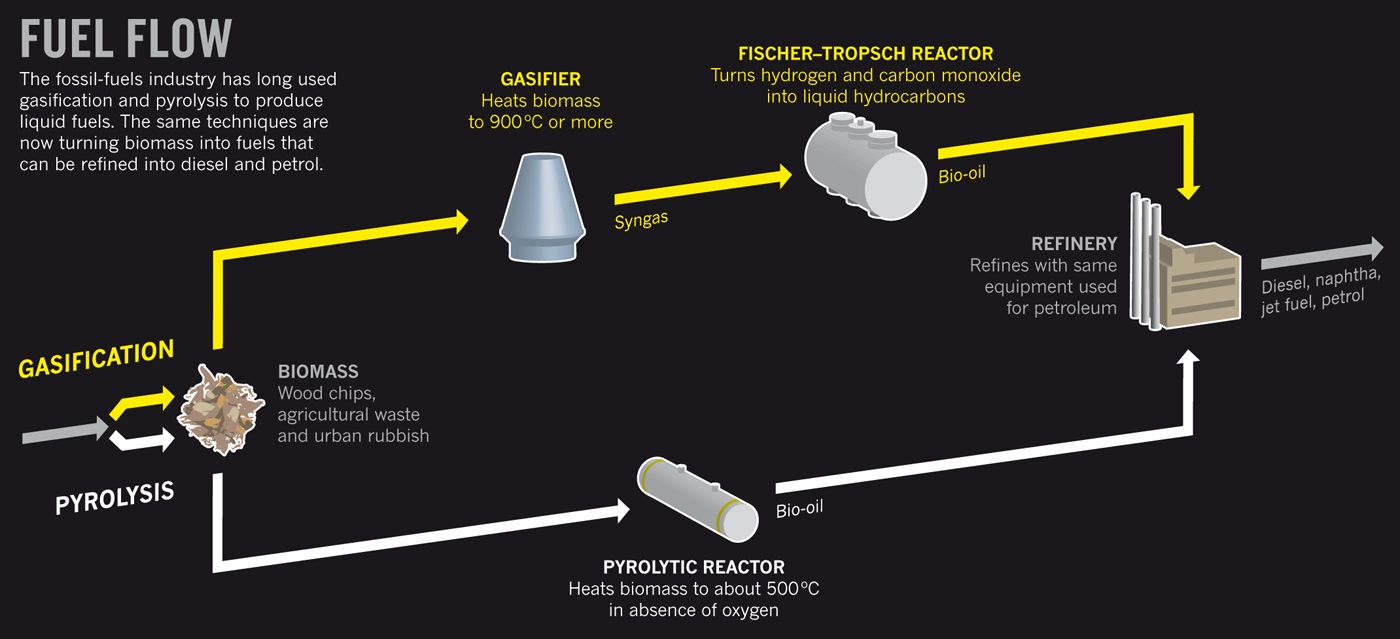
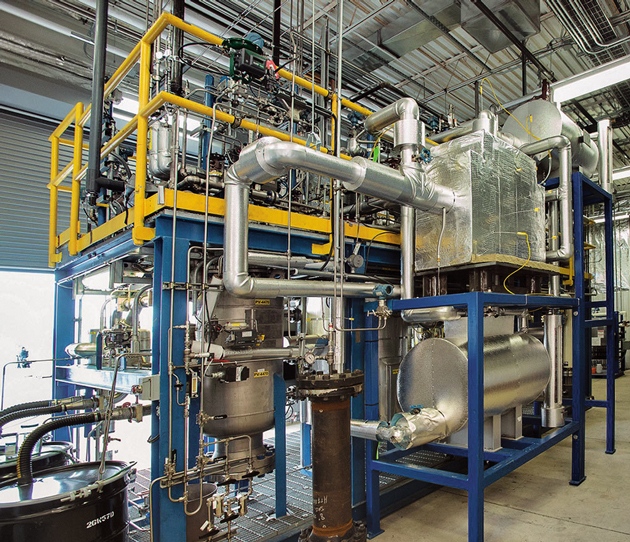
Heating up any organic material to make biofuel

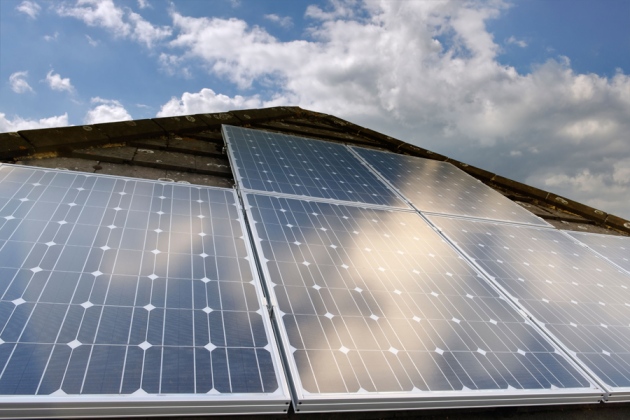
Turning photons into fuel

Bath-salt chemical promises safer solar cells

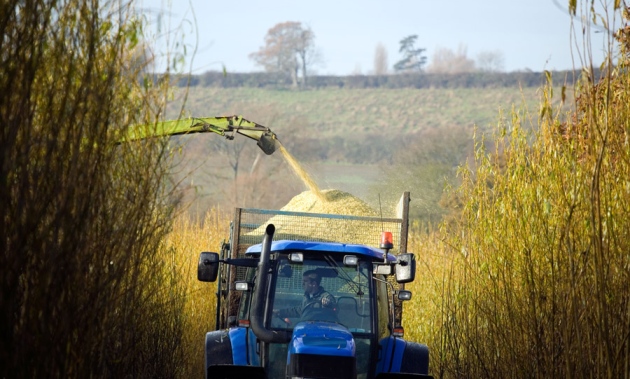
Chemical treatment could cut cost of biofuel

A new plastic material imitates veins to heal itself:
A robo-chemist for organic synthesis

Heating up any organic material to make biofuel
Turning photons into fuel

Bath-salt chemical promises safer solar cells
Chemical treatment could cut cost of biofuel
CCS infografics for UK policies
I love infografics, it take a couple of seconds to read and you feel more intelligent afterward! Well it is not entirely true but at least if you want to get deeper in a subject it is a doorsteps. So the UK government issued lately a document showing the possibility of a phase 2 development in CCS. And they did put a couple of infografics that I will paste here, for you guys to appreciate their vision. The document is retrievable here and the infografics are below.
 In this first infografics they show the 3 phases of development for an ideal CCS implementation plan. Phase 1 (in blue) is not entirely implemented but the idea is to build main pumping units (phase 1) and satellites (phase 2 and 3) to inject CO2 and also being able to retrieve extra oil reserves. It is the most realistic way to implement further CCS, through the integration with Extended Oil Recovery (EOR) techniques of aging oilfields.
 This second infografic show their first power generation project integrating CCS as a plan to reduce Carbon emission (White Rose CCS project), and how it will still be able to fulfill it's goal of powerhouse, in a greener manner than it's predecessors.

This last infografics is their second large power generation project integrating CCS (Peterhead CCS project).
Both projects plan offshore storage which most probably will be integrated as EOR feedstock. The document claims they should provide 40% of UK's energy by 2050!
Now that is a blue sky plan :-)
mercredi, juillet 23, 2014
The Guardians of the Earth

You can find the Nitrogen Cycle presentation here:
The Carbon Cycle presentation is found below. It is actually part of the same video, I just pinpointed at the correct time for you not to wait 45 min:
Also from the Stockholm Resilience Center, Nine Pillars of our planet have been defined, boundaries after which uncontrollable events will occur to try to re-establish the balance:
- Stratospheric ozone layer
- Biodiversity
- Chemicals dispersion
- Climate Change
- Ocean acidification
- Freshwater consumption and the global hydrological cycle
- Land system change
- Nitrogen and phosphorus inputs to the biosphere and oceans
- Atmospheric aerosol loading
The image on top is an estimation of how these factors changed since 1950.
mardi, juillet 22, 2014
Third pilar of the Earth
.jpg)
lundi, juillet 21, 2014
France, French and Reforms... One of these do not apply

Une question me vient à l'esprit: pourquoi envie-t-on plus facilement le petit patron que le grand? Les français ont tendance à aimer voir les "patrons payer" surtout ceux des petites PME, les plus fragiles. À première vue envier un patron de petite PME n'est pas tant sexy que d'envier Bill Gates ou feu Steve Jobs. Pourtant les deux dernier ont un train de vie beaucoup plus digne de Richard Gere dans "pretty woman" que le premier. Voici quelle peux être la raison: C'est plus simple d'envier quelqu'un un tout petit peu au dessus de toi, que tu vois tous les jours et avec qui tu arrives à te mesurer parce que les paramètres ne sont pas trop différent, ni les racines sociales. Maintenant quelqu'un qui est vraiment très au dessus de toi ou qui n'a pas eu la même éducation, pas fréquenté les mêmes lieux et qui a tendance à vouloir se cacher tu ne peux pas trop l'envier parce que tu ne le vois pas et en plus tu ne comprends pas vraiment ce par quoi il passe. Enfin les sommes en jeu sont tellement faramineuses parfois que tu ne vois même pas l'utilité de la dépense. Donc il est plus simple d'envier son patron dans une entreprise de 50 personnes que 50000.
Arctic: the last frontier... to spill out?

Partiality in Recorded Violence: Social Media Influence
Ultimately I am not keeping in touch with my followers, if any.. :-), and I do apologize. It is true that I got a bit dry in term of writing inspiration, it has never been my main strength and I am still at a moment of my life where I question a lot of things that will direct my next 20 years. But that will be for another time! What I wanted to talk about today was the multiplication of violent videos on the main social media since the organization of the 2014 edition of the FIFA World Cup. Facebook is currently an easier way to express your revolt upon injustice, even if it seems sometimes futile and useless you can still vent off, therefore the video came out of this platform but it could easily have come out of twitter or Google+. I decided to comment on the last of these videos, being short it wot be a problem and it symbolize a current revolt of the Brazilians against a restricted fraction of their police force behaving like during the old days where they were empowered to do a bit of whatever they wanted. That was 40 years ago. It is easy to generalize, then you end up discriminating and not trusting an entire task force over the act of a small fraction. Therefore I would like to see the entire history behind this video's event. Like I said earlier, I see many videos of outrageous happenings, but nobody mentions why we arrived at this point of violence. In this video, what did this guy in shorts do? Who is he? Are the cops really policemen, militia or actors who are finding a reason to revolt the mob (now any fantasy can seem real with a camera of poor quality, like in "Blair Witch" or "Clover Field" where they can hide cheap visual effects with bad camera)? A phrase that is out of context can be very misunderstood, fundamentalists use it as a basic enrollment techniques (whether Christian, Jews or Muslim fundamentalists). The same thing can happen with a video. I want to have a fair point of view based on irrefutable arguments and not driven by emotion and part-witnessed violence from an event without which we don't know neither why nor how nor the parties involved.
mardi, mars 11, 2014
Brazil looking for quick energy tap?
My opinion: recent international politic choices of pdt Dilma might suggest that Brazil did not get good output with some (hypothetical) north american negociation about energy delivery, therefore Brazil is looking for some other neighbors to close some more interesting deals (Venezuela? Cuba?). I'd say that is the current line of decision pdt Dilma is opting for. Therefore the cuban deal with BNDES, the latest and rather unexpected support on Maduro's political (and rather hectic) decisions.
vendredi, février 28, 2014
Samba corruption... bad trip

lundi, février 24, 2014
FIFA missing one point with Brazil

 |
| Curitiba's stadium, Feb 2014... |
 |
| Accident in SP's stadium, 2 casualties |
Patrick MacDonald is right here, but not only Human Right division should be hurting FIFA's feeling, also an audit team and an independent Ethic's Committee to check on both Blatter and his internal Ethic's Committee.
Conclusion: I will not watch the World Cup, I have decided long ago the boycott was a wise decision to hit where it hurts the most, the (FIFA's) wallet through not buying, not watching TV. Instead I will rent my flat in Rio and go to France, anyone interested?? :-)))
Addendum: Just one day after my post, Financial Times published this nice article. I guess this is what we can call telepathy!
mercredi, février 12, 2014
Uhuru: because a Nation Spying them All kills globalization and brings back regionalization

lundi, février 10, 2014
Brazilian creativity
 I was with my wife walking back from some place I do not remember when we passed a place that smelled like a dirty homeless guy was sleeping somewhere, except we could not not see him (important point for this post, my wife is brazilian, I'm not). So my wife said "it is a ghost" which made me trip a bit but as I am not a 7 year old anymore (30 years ago I was) I quickly came back to Earth and told her the same thing I just told you. But she was convinced, so I strat to trip again... until I came back to my sences and asked what she meant. A ghost is actually the rag these guy used and that catches their smell, so when they are not here it seems they still are linging around but you cannot see them... a "ghost"! That reminded me that I was always impressed by the way the brazilian people I was hanging with always had that sort of game of contextual nicknaming, more than other cultures (USA, France... you name it). The game is to find the funniest nickname that would immediately have you understanding a fact by the context relating the two (in fact here, the "smeely" ghost and the homeless rag left which smell reminds the presence of the person). That creativity is hardly matched.
Yesterday I watched that documentary about creativity as well, and was interviewed Paulo Barros, the director of the carnival of the samba school União da Tijuca. He said that while he was doing something (irrelevant) he saw a truck with thousands of cooking panels that would go to trash, that gave him an idea as he had to create the carnival's car which was about Oz. The panels where used to create a huge tin man.
Creativity is something that Brazil has a lot, maybe from the fact (e.g.) that they need to make something important (allegoric cars and costumes) out of not much every year for carnival, and it drags throughout the entire society. Counterpart is that they have trouble to monetize correctly that creativity, which seems to be more an north american quality.
Happy Carnival!!

vendredi, janvier 31, 2014
Multinational Ramping up to Tackle Climate Change

The article:
Industry Awakens to Threat of Climate Change
Coca-Cola has always been more focused on its economic bottom line than on global warming, but when the company lost a lucrative operating license in India because of a serious water shortage there in 2004, things began to change.
Today, after a decade of increasing damage to Coke’s balance sheet as global droughts dried up the water needed to produce its soda, the company has embraced the idea of climate change as an economically disruptive force.
“Increased droughts, more unpredictable variability, 100-year floods every two years,” said Jeffrey Seabright, Coke’s vice president for environment and water resources, listing the problems that he said were also disrupting the company’s supply of sugar cane and sugar beets, as well as citrus for its fruit juices. “When we look at our most essential ingredients, we see those events as threats.”
Coke reflects a growing view among American business leaders and mainstream economists who see global warming as a force that contributes to lower gross domestic products, higher food and commodity costs, broken supply chains and increased financial risk. Their position is at striking odds with the longstanding argument, advanced by the coal industry and others, that policies to curb carbon emissions are more economically harmful than the impact of climate change.
“The bottom line is that the policies will increase the cost of carbon and electricity,” said Roger Bezdek, an economist who produced a report for the coal lobby that was released this week. “Even the most conservative estimates peg the social benefit of carbon-based fuels as 50 times greater than its supposed social cost.”
Some tycoons are no longer listening.
At the Swiss resort of Davos, corporate leaders and politicians gathered for the annual four-day World Economic Forum will devote all of Friday to panels and talks on the threat of climate change. The emphasis will be less about saving polar bears and more about promoting economic self-interest.
In Philadelphia this month, the American Economic Association inaugurated its new president, William D. Nordhaus, a Yale economist and one of the world’s foremost experts on the economics of climate change.
“There is clearly a growing recognition of this in the broader academic economic community,” said Mr. Nordhaus, who has spent decades researching the economic impacts of both climate change and of policies intended to mitigate climate change.
In Washington, the World Bank president, Jim Yong Kim, has put climate change at the center of the bank’s mission, citing global warming as the chief contributor to rising global poverty rates and falling G.D.P.’s in developing nations. In Europe, the Organization for Economic Cooperation and Development, the Paris-based club of 34 industrialized nations, has begun to warn of the steep costs of increased carbon pollution.
Nike, which has more than 700 factories in 49 countries, many in Southeast Asia, is also speaking out because of extreme weather that is disrupting its supply chain. In 2008, floods temporarily shut down four Nike factories in Thailand, and the company remains concerned about rising droughts in regions that produce cotton, which the company uses in its athletic clothes.
“That puts less cotton on the market, the price goes up, and you have market volatility,” said Hannah Jones, the company’s vice president for sustainability and innovation. Nike has already reported the impact of climate change on water supplies on its financial risk disclosure forms to the Securities and Exchange Commission.
Both Nike and Coke are responding internally: Coke uses water-conservation technologies and Nike is using more synthetic material that is less dependent on weather conditions. At Davos and in global capitals, the companies are also lobbying governments to enact environmentally friendly policies.
But the ideas are a tough sell in countries like China and India, where cheap coal-powered energy is lifting the economies and helping to raise millions of people out of poverty. Even in Europe, officials have begun to balk at the cost of environmental policies: On Wednesday, the European Union scaled back its climate change and renewable energy commitments, as high energy costs, declining industrial competitiveness and a recognition that the economy is unlikely to rebound soon caused European policy makers to question the short-term economic trade-offs of climate policy.
In the United States, the rich can afford to weigh in. The California hedge-fund billionaire Thomas F. Steyer, who has used millions from his own fortune to support political candidates who favor climate policy, is working with Michael R. Bloomberg, the former New York mayor, and Henry M. Paulson Jr., a former Treasury secretary in the George W. Bush administration, to commission an economic study on the financial risks associated with climate change. The study, titled “Risky Business,” aims to assess the potential impacts of climate change by region and by sector across the American economy.
“This study is about one thing, the economics,” Mr. Paulson said in an interview, adding that “business leaders are not adequately focused on the economic impact of climate change.”
Also consulting on the “Risky Business” report is Robert E. Rubin, a former Treasury secretary in the Clinton administration. “There are a lot of really significant, monumental issues facing the global economy, but this supersedes all else,” Mr. Rubin said in an interview. “To make meaningful headway in the economics community and the business community, you’ve got to make it concrete.”
Last fall, the governments of seven countries — Colombia, Ethiopia, Indonesia, South Korea, Norway, Sweden and Britain — created the Global Commission on the Economy and Climate and jointly began another study on how governments and businesses can address climate risks to better achieve economic growth. That study and the one commissioned by Mr. Steyer and others are being published this fall, just before a major United Nations meeting on climate change.
Although many Republicans oppose the idea of a price or tax on carbon pollution, some conservative economists endorse the idea. Among them are Arthur B. Laffer, senior economic adviser to President Ronald Reagan; the Harvard economist N. Gregory Mankiw, who was economic adviser to Mitt Romney’s presidential campaign; and Douglas Holtz-Eakin, the head of the American Action Forum, a conservative think tank, and an economic adviser to the 2008 presidential campaign of Senator John McCain, the Arizona Republican.
“There’s no question that if we get substantial changes in atmospheric temperatures, as all the evidence suggests, that it’s going to contribute to sea-level rise,” Mr. Holtz-Eakin said. “There will be agriculture and economic effects — it’s inescapable.” He added, “I’d be shocked if people supported anything other than a carbon tax — that’s how economists think about it.”
Hope you enjoyed it. Do not hesitate to comment here or on the NYT's page.
dimanche, décembre 08, 2013
Samba corruption... the hangover
This post is the sequel of the Samba corruption post I released a couple of days ago where I might have seemed categoric and full of preconceived ideas. But it was only one side of the story. As for every news, as soon as you read it is already both wrong and history fact. I encourage every one to listen to the country and hear all the voices that speak, from facebook, twitter, blogs and newspapers. What remains is a baseline of hope that brazilians are through with corruption, country of low education, high corruption where the money is invested poorly when not kept safe abroad for personal wealth. Things are changing, brazilians are demanding and they want professionalism instead of cheap magic and smoke curtains. I saw this news (in Portuguese) saying that, finally, the game of power from Globo seems over. I was having a discussion with my wife trying to understand how a TV channel could over the years and with the globalization stay always so dominant. Well I read this article and got the answer. I translated it in english for a larger audience to have a grasp of what happened and understand that things, in Brazil, are changing and fast.
The above link, translated in english:
There are many signs showing that the crisis that has developed in the Botanical Garden is here to stay . Growing rumors that the company will not be able to honor payroll and expenses in 2014 and therefore commissioned a study of cuts, mainly in wages paid to actors. For the first time in history, Globo has a manager in charge that came from journalism and used to lower production costs . He was astonished at what he saw in Globo Productions, expenses that go well beyond industry standards.
And the deviations ?
" There must be a lot of corruption," says a veteran who has held management positions, " One imagines that there is overpricing , things that work well for years . And if he stirs it up there he might fall" he concludes . As we know that the string always bursts from the weaker side, hardly budget cuts will affect the best actors, but the intermediate wages and little thieves as the banks that " deviate clip and elastic". But the fact is that bleeding trigger leaks, raw material for any journalist will never be put in defect in 2014 . After all " In a house where the bread is missing, everybody fights and nobody is right".
And what's behind this "phenomenon " ?
A significant drop in sales! Hardly able to keep the Globe BV, the volume bonuses, paid to advertising agencies whenever she concentrates ads on the same channel. The reason ? Less audience. There is no argument that proves the owner that the maintenance of a national campaign in a broadcaster is advantageous, if she does not take the message to the public that it promises. Globo is therefore facing a huge impasse like never seen before .
But why the audience falls so fast ?
Analysts polled by this blog say it is time to " review indexes " . The announcement that the competing TV stations just hire another institute to make measurements - using even more meters - is forcing Ibope , which has always been "from the house " , to review its " methodology " .
Not new, isn't it?
Any time data is questioned . Since the defunct TV Manchete, of Bloch, who in the '90s challenged Globo's fields where she boasted of having more competence : soap opera and major television news coverage , such as Carnival . At the end of the same decade , another competitor also accused Ibope of manipulation: SBT. Silvio Santos came to ban the audience meter of his station , a sign that did not trust the numbers. But not if none of the cases Globo agencies and TV Globo were concerned.
What has changed ?
Recently TV Record thickened the chorus , accusing Ibope of consolidating their numbers down and the competitor station up. That's what finally triggered the search for a more independant system of measurement. Finally was created a culture broth necessary to question the ethics of the competitive practice of Marinho's channel.
But this is only one side of the crisis?
Yes, it really is " picking " on their side is that for the first time there is no political support from older times . From time to time, the station is also under fire from social networks . Their actions and their methods are questioned all the time .
The signal chickened when?
In June , a crowd of protesters decided to march toward the company's subsidiary in São Paulo on the Cable-Stayed Bridge , new postcard of the city , shouting slogans against the manipulation and the monopoly exercised by the group . " That created enormous instability.We stayed inside afraid of invasion and vandalism" said one official, who was required to wait after hours for the crowd to disperse before leaving the building that night .
And do not stop there ...
Everyone remembers that renowned journalists began to be harassed during covering, cars vandalized and torched, reports aborted for safety and a huge effort had to be made in the months after to try to rescue the image and confidence of the channel. But the damage was already done . Today , the station is treated with hatred. Their news lost credibility nor the recent game of chairs implemented worked.
And friendly fire ?
Fátima Bernardes and Zeca Camargo left for line shows, which for Globo Production was another sign that journalism progresses on schedule. Result: boycotts . Is difficult to work in some programs , which became the target of friendly fire or internal competition . Another destabilizing factor .
But that is nothing
The blow was the scandal of the offshore banks accounts to evade tax authorities. Estimated debt with penalty and interest came to be a billion dollars . That's right , one billion, all audited , documented , judged, condemned , but not paid because of spectacular actions, which involved bribery , theft of public faith document , blackmail , intimidation and even exchange of gunfire , that elicited a typical modus operandi of the best scripts of the films shown in Prime Time. Some maintain that the broadcaster has bought stolen documents from the IRS and to recover the document on the day of the sale, they had forged a policeman striking to send a TV crew to cover the event .
Any signs of cooling dow?
It seems that this time , however there are still some political action in Brasilia , the order is moving the process forward . " Let Globo Bleed " was the mantra as it is sung in Bossa Nova very softly , an allusion to the celebrated declaration of Fernando Henrique Cardoso to Tucanos chiefs , during the Mensalão scandal and the possibility of impeachment of President Lula . Even today the process that pilfered Revenue " has not showed up ." But it is one of the best campaign and blackmail dossiers around the block.
This weakens the image of the Brothers
To appear smiling in photos that illustrated the news that today they sum up one of the greatest wealth of the country , the Marinho brothers also contribute nothing to improve the image of the company. In an unjust and unequal country like ours , the news has a devastating effect on the image of the conglomerate . The public begins to think , albeit empirically , that they are the typical white-collar criminals . People who attend the social columns , " detached " , celebrities , but not worth , in the jargon of the class walking train " a sour pot " .
With a combination of these , what to expect ?
With the words of our worshiped Marcos Valle :
Today is a new day
Of a new time that begins
From these new days
the joys will be for all
All we need is wanting
All our dreams will come true
The future has already begun ...
Sought without much interest in knowing its opinion , I admit, the broadcaster would not comment
Thank you
The above link, translated in english:
There are many signs showing that the crisis that has developed in the Botanical Garden is here to stay . Growing rumors that the company will not be able to honor payroll and expenses in 2014 and therefore commissioned a study of cuts, mainly in wages paid to actors. For the first time in history, Globo has a manager in charge that came from journalism and used to lower production costs . He was astonished at what he saw in Globo Productions, expenses that go well beyond industry standards.
And the deviations ?
" There must be a lot of corruption," says a veteran who has held management positions, " One imagines that there is overpricing , things that work well for years . And if he stirs it up there he might fall" he concludes . As we know that the string always bursts from the weaker side, hardly budget cuts will affect the best actors, but the intermediate wages and little thieves as the banks that " deviate clip and elastic". But the fact is that bleeding trigger leaks, raw material for any journalist will never be put in defect in 2014 . After all " In a house where the bread is missing, everybody fights and nobody is right".
And what's behind this "phenomenon " ?
A significant drop in sales! Hardly able to keep the Globe BV, the volume bonuses, paid to advertising agencies whenever she concentrates ads on the same channel. The reason ? Less audience. There is no argument that proves the owner that the maintenance of a national campaign in a broadcaster is advantageous, if she does not take the message to the public that it promises. Globo is therefore facing a huge impasse like never seen before .
But why the audience falls so fast ?
Analysts polled by this blog say it is time to " review indexes " . The announcement that the competing TV stations just hire another institute to make measurements - using even more meters - is forcing Ibope , which has always been "from the house " , to review its " methodology " .
Not new, isn't it?
Any time data is questioned . Since the defunct TV Manchete, of Bloch, who in the '90s challenged Globo's fields where she boasted of having more competence : soap opera and major television news coverage , such as Carnival . At the end of the same decade , another competitor also accused Ibope of manipulation: SBT. Silvio Santos came to ban the audience meter of his station , a sign that did not trust the numbers. But not if none of the cases Globo agencies and TV Globo were concerned.
What has changed ?
Recently TV Record thickened the chorus , accusing Ibope of consolidating their numbers down and the competitor station up. That's what finally triggered the search for a more independant system of measurement. Finally was created a culture broth necessary to question the ethics of the competitive practice of Marinho's channel.
But this is only one side of the crisis?
Yes, it really is " picking " on their side is that for the first time there is no political support from older times . From time to time, the station is also under fire from social networks . Their actions and their methods are questioned all the time .
The signal chickened when?
In June , a crowd of protesters decided to march toward the company's subsidiary in São Paulo on the Cable-Stayed Bridge , new postcard of the city , shouting slogans against the manipulation and the monopoly exercised by the group . " That created enormous instability.We stayed inside afraid of invasion and vandalism" said one official, who was required to wait after hours for the crowd to disperse before leaving the building that night .
And do not stop there ...
Everyone remembers that renowned journalists began to be harassed during covering, cars vandalized and torched, reports aborted for safety and a huge effort had to be made in the months after to try to rescue the image and confidence of the channel. But the damage was already done . Today , the station is treated with hatred. Their news lost credibility nor the recent game of chairs implemented worked.
And friendly fire ?
Fátima Bernardes and Zeca Camargo left for line shows, which for Globo Production was another sign that journalism progresses on schedule. Result: boycotts . Is difficult to work in some programs , which became the target of friendly fire or internal competition . Another destabilizing factor .
But that is nothing
The blow was the scandal of the offshore banks accounts to evade tax authorities. Estimated debt with penalty and interest came to be a billion dollars . That's right , one billion, all audited , documented , judged, condemned , but not paid because of spectacular actions, which involved bribery , theft of public faith document , blackmail , intimidation and even exchange of gunfire , that elicited a typical modus operandi of the best scripts of the films shown in Prime Time. Some maintain that the broadcaster has bought stolen documents from the IRS and to recover the document on the day of the sale, they had forged a policeman striking to send a TV crew to cover the event .
Any signs of cooling dow?
It seems that this time , however there are still some political action in Brasilia , the order is moving the process forward . " Let Globo Bleed " was the mantra as it is sung in Bossa Nova very softly , an allusion to the celebrated declaration of Fernando Henrique Cardoso to Tucanos chiefs , during the Mensalão scandal and the possibility of impeachment of President Lula . Even today the process that pilfered Revenue " has not showed up ." But it is one of the best campaign and blackmail dossiers around the block.
This weakens the image of the Brothers
To appear smiling in photos that illustrated the news that today they sum up one of the greatest wealth of the country , the Marinho brothers also contribute nothing to improve the image of the company. In an unjust and unequal country like ours , the news has a devastating effect on the image of the conglomerate . The public begins to think , albeit empirically , that they are the typical white-collar criminals . People who attend the social columns , " detached " , celebrities , but not worth , in the jargon of the class walking train " a sour pot " .
With a combination of these , what to expect ?
With the words of our worshiped Marcos Valle :
Today is a new day
Of a new time that begins
From these new days
the joys will be for all
All we need is wanting
All our dreams will come true
The future has already begun ...
Sought without much interest in knowing its opinion , I admit, the broadcaster would not comment
Thank you
vendredi, novembre 29, 2013
Samba Corruption

The most worrying problem (to my own sense) Brazil is currently facing is corruption. I will probably state the obvious here but corruption takes your management resources, drive your country away from productivity and has the tendency to tire the populations. I remember once I was talking to a friend of mine from Ivory Coast in 2000's something over a laundry machine in Paris (a lot happen when you go clean your clothes). He was explaining me how friends of his had worked a lot to make money in Paris and then went back to IvC to open a shop... real entrepreneurial endeavour. Arriving there they spent away all their investment in small "payments" to help their store opining process which eventually never happened. Small corruption had eaten all the money away. You can understand that it does not only happened to that person and this non regulated government is participating to the decadence of the country (I love to blame the government ^_^). Well in Brazil you can find something similar and after years in the country I believe it has helped to lower the economy growth from what it should have been. I can see three main corruption schemes:
- Something equally dangerous to generalized small corruption that is called patrimonialism: you earned a position thanks to your birth line before your competences. Brazil is full of it and example flows (family Sarney, sons of ex-president Lula and many more). Even if everybody knows, it is big enough for all these people to walk away in impunity.
- Which drives me to the second plague: impunity of crimes (like the case of the -now solved- Mensalão). Not only for corruption cases but for all sort of criminal offences. I remember when I first came to Brazil I realized the price of life was not the same as in Europe. You get into trouble and you die for quite stupid reasons here (traffic issue, stressed out robber, lost bullet if you are near dangerous favelas...). Your assailant has good chance to disappear unharmed and uncharged for his crimes. The country is big and there is enough place to hide but that's not new. Justice is slow for charging criminals and your social origin is a factor to get things resolved. The late case of the foreign girl raped in a minibus is a typical example of social factor for crime resolution as it had happen before to local favela girls (same criminals) but when this American victim hit the tabloids the case was solved in a week. So if you want to keep on your criminal activity better keep low profile and only hassle the locals! So when big money is "lost", construction projects overpriced, social fundings hijacked for private purpose by the time the justice is on the case the money has vanished and the criminals already seeked out their protection. How not to want to steal when your own head of state are robbing the country? That blurs with patrimonialism and race issues, but here is an exposed example showing that they are wanting to end with the trends. Rio de Janeiro is very representative of that kind of corruption.
- That brings me to the carioca factor, things happen else where in Brazil and not in Rio (the Alphaville complex never settled in Rio before 2011 and it is a national brand, but from São Paulo!) or the contrary. Something that has to do with the "carioca spirit" of the city, "o jeitinho carioca", gives you the feeling there is no other way to do or organize something than their way. When you arrive in Rio for carnival all is shiny, beautiful and well organized. After a while you start to explore more the city, the state and you realize it is messy and absolutely not optimised financially. All that money disappearing isn't used for education, health or public transport so everything is going overpriced because there is not enough qualified people, hence not enough wealth produced but more people wanting to consume. Very recently the case of an abuse of public resources to private ends splashed at the governor of Rio de Janeiro state during the June protests and it is an actual sign of changing mentalities (which will be debated on a later post). That is only a representative example showing that it could and should be better but the head of the organization is not interested to improve for not knowing better.
- That brings me to the carioca factor, things happen else where in Brazil and not in Rio (the Alphaville complex never settled in Rio before 2011 and it is a national brand, but from São Paulo!) or the contrary. Something that has to do with the "carioca spirit" of the city, "o jeitinho carioca", gives you the feeling there is no other way to do or organize something than their way. When you arrive in Rio for carnival all is shiny, beautiful and well organized. After a while you start to explore more the city, the state and you realize it is messy and absolutely not optimised financially. All that money disappearing isn't used for education, health or public transport so everything is going overpriced because there is not enough qualified people, hence not enough wealth produced but more people wanting to consume. Very recently the case of an abuse of public resources to private ends splashed at the governor of Rio de Janeiro state during the June protests and it is an actual sign of changing mentalities (which will be debated on a later post). That is only a representative example showing that it could and should be better but the head of the organization is not interested to improve for not knowing better.
mardi, novembre 05, 2013
Brain drain 2.0
 |
| http://www.jiscinfonet.ac.uk/topics/moocs/ |
The MOOCs, or Massive Online Open Courses, is said to be a new way to get knowledge without having to dislocate from where you are. It is free or cheap, and dispensed by reknown universities (Havard, Stanford, MIT). I see a clear continuation of an American culture that started during the second WW: the brain drain, or importing foreign innovative minds to work in and for the USA. By creating these courses they found a way to identify the best brains from all over the World, even before they go to the university. You just need a cyber-cafe with an average internet connection. You never change a good system do you?
Trip down to memory lane
There's not much about energy here, more about where it all came from and how did I come to be who I am today professionally. My old university shaped the way I started to work and I really got that macro vision of the world while studying there. I got to visit my old coordinators; well, I went to se their desks but due to a damn strike they decided to work from home! I hate strikes!!! (Put a link of swearing Don from how not to live your life). I am remembering all my buddies I used to go to places with around the uni. Number 5 was one of them, I have lots of nice memories here. Liverpool really transformed itself into a neat city, though the dptnt of chemistry did not change much. Messy as ever apart from the hall that looks fresh. I feel the loneliness of the memory lane too, everybody is gone so I am left with nothing here. Still coming back makes me want to stay. UK is amazing to get to you with the completely controled way of life. People almost dont attend to where they walk, what they do. Some students are really dressed like crazy now (I saw a jananim addict, and a vampire fan going down the hall in white make up like it was normal). In 10 years time it's going to be even funnier. Come to think of it it was Halloween so that was most probably why, but party dress during the day is extreme (ish).
The only energy related point I could think of now is the fact that nowadays in the UK the moto is energy saving, when you look at daily life and urban organization. Also I took the bus and paid 2.10£ a ticket, I wonder how that would translate in brazilian lifestyle? What I mean by this is when you look at a minimum wage, price of the basic food basket in each country, is it more expensive in UK than in Brazil? If Brazil manage to increase its efficiency in manufacturing, will it come to UK's point eventually?
The picture was taken from "number 5", famous classy student bar where I use to hang around with my buddies from all over.

vendredi, octobre 18, 2013
An expensive country to live in
I saw yesterday an announcement saying that the PS4 Brazil edition (Sony) is the most expensive worldwide. Why is that? It is well over twice the US price so it's cheaper to fly to the US and buy it there (which they know). One thing I realized when I checked the distribution of IP filled in the country: on top of being the lowest of the BRICS countries, 80% of IP filled is non-resident. Now I'm going to debunk that briefly for those who are not familiar with IP notion.
IP (intellectual property) is a protection of an idea, it's the patent (all the buzz from Apple for example, patenting anything that moves within the office!). When the IP filled in a given country is non-resident it means that whoever filled it is fiscally based in the country but the country of origin is foreign. It might not even be compulsory to have a fiscal HQ in Brazil to fill in for IP. So what is patented in Brazil is technology from abroad applied in Brazil. As there is too few brazilian innovation it keeps competition away. Now companies are using the consumism habit brazilian got since money started to flow and price their items as high as brazilian would allow it to. Now that would have probably worked without the innovation, but it kills the innovation spirit in Brazil and force the country into a foreign innovation dependant consumism. That is dangerous for technology independance.
Now that is only one aspect. I probably should mention that the country needs 200000 more engineers to function properly.
There is a lack of proper logistical infrastructure, no train, only air, sea and roads. It create delays in delivery when there is a delivery (trucks have accidents). Roads are overloaded, dangerous and not maintained. So for example farmers can loose entire production when the transport is not coming in time to pick up the goods (price increase reduction in efficiency for the same amount of goods products).
The Value added per brazilian inhabitants is half of USA inhabitants, logically the price follow an opposite tendance.
Brazilian production has not increased since the 90's but consumption of good increased dramatically since the middle class exploded.
Moreover the government applies importation taxes in the name of protectionism but nothing is done to increase the national production (to be fair there are actions taken but it started this year only).
So to conclude this, yes Brazil is one expensive country to live in.
mardi, octobre 15, 2013
Big Oil is the only one to effectively set up a carbon tax

Now my analysis of that never-ending story of "let us go forward!" and then "errr na, finally we keep on hiding" was that governments were either too short-term focused or too powerless to move forward and that the environment issues would be embraced by the industries as a survival reflex from an observation that in the long term they would not survive the changes Humans force into Mother Earth. (digression) An ecologically stable Earth is much more profitable to a healthy economy in the long term (end of digression).
I already saw some moves made by the Oil and Gas industries starting to be really concerned, simply because (this time thanks to the governments) environmental accidents could potentially be financially unbearable. A couple of months ago I saw on the news that the proper OPEC is preparing to enforce a tax on Oil consumption. Governments are currently on heavy back-down of CCS projects, when not shut down (^-^) and on the contrary private sector is growing more independent due to internationalization (e.g. staying in the US to re-inforce the contrast, US is to become the first oil producer in 2014, thanks to unconventional production). No wonder that this idea I emulated almost a year ago but I never could quite finish (lack of time) is already been voiced out loud.
To conclude in a light note, Daniel C Bennet in many of his books explains how an idea or a meme is like a Been which purpose is to reproduce and survive (the original expression of the meme before the internet took it over as some funny-ish images cartooning your feelings of a particular event). A bit like a virus: protein shell, single DNA string invading your body to reproduce and move forward to another one. It can also create some physiological disturbances (if the idea is a strong one!!). I guess the idea I am mentioning in this post is a good example.
Inscription à :
Commentaires (Atom)